
The Best CNC Software for Hobbyists and Pros — 2026. That’s what we’re getting into today, and it’s a topic worth getting right. Whether you’re cutting your first piece of plywood in a garage workshop or running a production floor that never sleeps, the software driving your CNC machine is just as important as the machine itself. Get it wrong, and you’re burning time, wasting material, and fighting your tools instead of using them. Get it right, and the work almost speaks for itself.
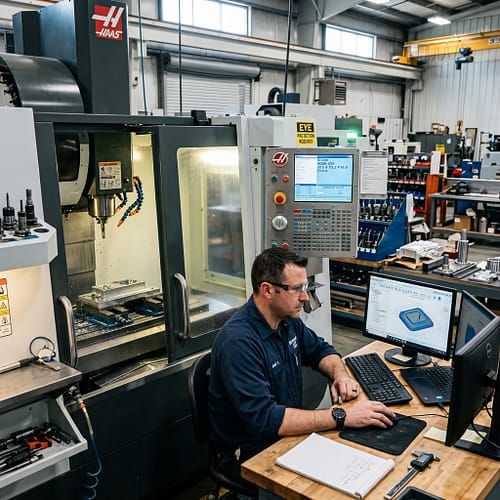
This isn’t a list built for window shoppers. It’s built for people who actually make things — weekend woodworkers, metal fabricators, sign makers, engineers, and small-shop owners who need software that keeps up with the job. We’ve broken down the best options available in 2026, covering what each one does well, who it’s built for, and what to watch out for before you commit. By the time you’re done reading, you’ll know exactly which platform deserves a place on your workbench.
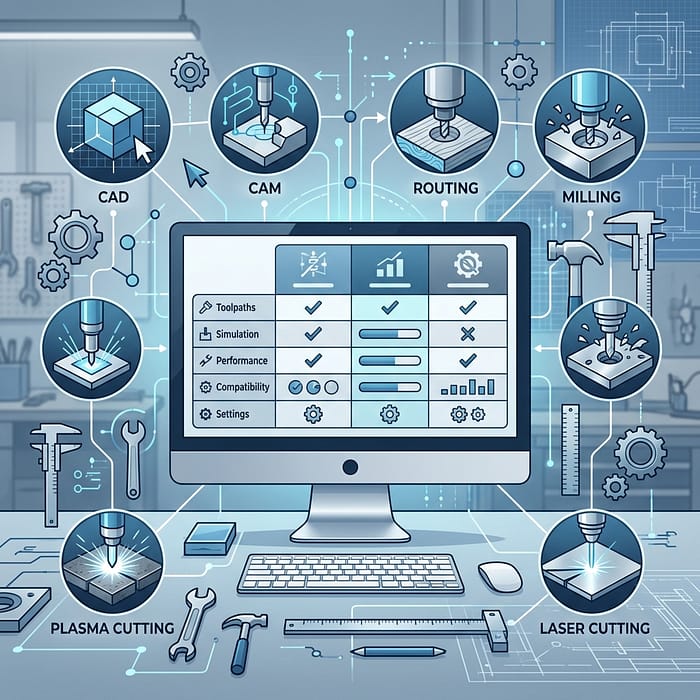
Comparison Table
|
Software |
Best For |
Pricing Model |
Skill Level |
Key Strength |
|---|---|---|---|---|
|
Fusion 360 |
All-around CAD/CAM |
Subscription |
Intermediate–Pro |
Integrated design-to-manufacture |
|
VCarve Pro |
Woodworking & signs |
One-time purchase |
Beginner–Intermediate |
V-carving & decorative routing |
|
Mastercam |
Professional machining |
Subscription + fees |
Advanced–Pro |
Industry-standard 5-axis CAM |
|
Carbide Create |
Complete beginners |
Free / One-time Pro |
Beginner |
Simple, fast toolpath generation |
|
Mach4 |
Machine control |
One-time purchase |
Intermediate |
Flexible CNC controller |
|
SolidWorks CAM |
SolidWorks engineers |
Subscription |
Intermediate–Pro |
Native SolidWorks integration |
|
HSMWorks |
SolidWorks on a budget |
Subscription |
Intermediate |
Affordable SolidWorks CAM |
|
CamBam |
Hobbyist routing/milling |
One-time purchase |
Beginner–Intermediate |
Lightweight & affordable |
|
Easel |
First-time CNC users |
Free / Subscription |
Beginner |
Browser-based, zero setup |
|
SheetCam |
Plasma, laser, waterjet |
One-time purchase |
Intermediate |
Purpose-built sheet cutting |
|
LinuxCNC |
Custom machine builds |
Free (open-source) |
Advanced |
Deep hardware customization |
|
Carveco Maker |
Artistic 3D carving |
Subscription |
Beginner–Intermediate |
3D relief carving library |
1. Fusion 360 — Best All-Around CNC Software for Serious Makers
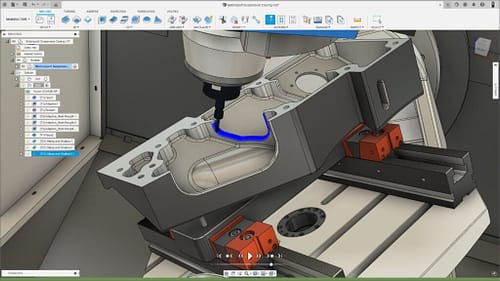
If there’s one platform that gets brought up in nearly every CNC conversation, it’s Fusion 360. Developed by Autodesk, this cloud-based software combines CAD (computer-aided design), CAM (computer-aided manufacturing), and CAE (computer-aided engineering) into a single environment — meaning you can design a part, simulate how it’ll be machined, and generate toolpaths without ever switching applications. That’s a meaningful thing when you’re trying to move a project from idea to finished part without losing your train of thought.
For hobbyists stepping up from basic tools, Fusion 360 offers a free personal-use license that covers a surprisingly wide range of features, including 2.5-axis and 3-axis machining. For professionals, the paid subscription unlocks multi-axis machining, advanced simulation, and more sophisticated toolpath strategies. The learning curve is real — this isn’t software you’ll master in an afternoon — but the investment pays off. Thousands of tutorials, an active community forum, and Autodesk’s own documentation mean help is never far away.
One of Fusion 360’s standout strengths is cloud-based collaboration. Teams working across multiple locations can access and edit the same project files in real time — a genuine advantage for small businesses that have grown beyond a single workstation. It also supports a broad library of post-processors, making it adaptable across different shop setups.
Best for: Hobbyists ready to go deeper and professionals who need an integrated design-to-manufacture workflow.
Watch out for: Subscription costs can climb quickly for commercial users, and reliance on cloud connectivity means an internet outage can disrupt your session.
2. VCarve Pro — The Go-To Choice for Woodworkers and Sign Makers
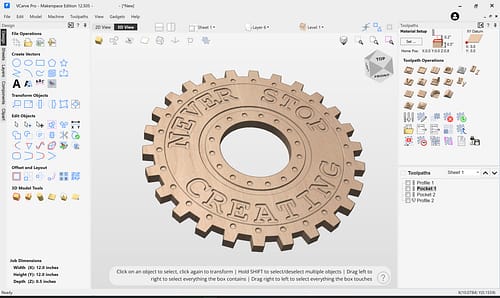
Built by Vectric, VCarve Pro has earned a devoted following among woodworkers, sign makers, and anyone doing decorative CNC routing. It’s not trying to do everything — and that focused approach is exactly what makes it so effective at what it does. The interface is clean, the workflow is logical, and within a few hours of use, most people are producing parts they’re genuinely proud of. That’s not an accident. Vectric built this tool for makers, not just machinists.
VCarve Pro handles 2D and 2.5D toolpaths with exceptional control. V-carving — the technique of cutting decorative V-shaped profiles into material — is where the software truly shines, giving users precise control over lettering, artistic designs, and detailed relief work. It also supports 3D roughing and finishing, opening it up to more sculptural projects without requiring a full 3D CAD background.
The software includes a solid library of vectors, clipart, and 3D models that users can pull directly into projects. For small shops producing custom signs, personalized gifts, or decorative furniture components, that library alone can save hours of design time. VCarve Pro also supports a wide range of post-processors, making it compatible with most hobby-grade and professional CNC routers on the market.
One important note: VCarve Pro is a one-time purchase, not a subscription. In a world where software companies increasingly move to recurring billing, that’s a meaningful distinction for budget-conscious makers.
Best for: Woodworkers, sign makers, and hobbyists focused on decorative and 2.5D routing.
Watch out for: Not designed for full 3D machining or multi-axis work — for those applications, you’ll need to look elsewhere.
3. Mastercam — The Industry Standard for Professional Machinists
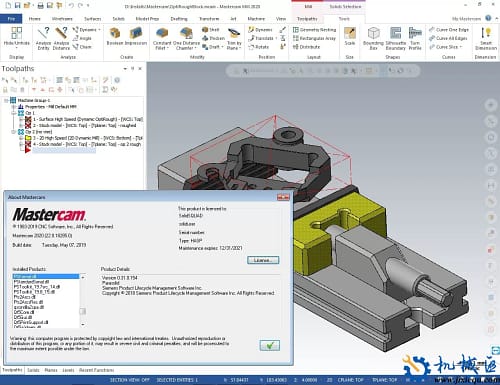
Ask a machinist with twenty years of experience what software they learned on, and there’s a reasonable chance they’ll say Mastercam. It’s been around since 1983, and it remains one of the most widely used CNC programming platforms in professional manufacturing environments worldwide. Colleges and trade schools frequently teach it as part of their machining programs, which means a workforce trained in Mastercam is readily available — a practical advantage for shops hiring skilled operators.
Mastercam’s toolpath capabilities are extensive. It handles everything from basic 2D profiling to full 5-axis simultaneous machining with the kind of precision that aerospace and medical manufacturing demands. Its Mill, Lathe, Router, and Wire EDM modules cover virtually every machining application a professional shop might encounter, and each module is deeply configurable to match specific machine capabilities and material requirements.
For high-volume production environments, Mastercam’s Dynamic Motion technology is worth highlighting. This proprietary toolpath engine reduces cycle times and extends tool life by constantly adjusting the cutting angle to maintain consistent chip load — producing measurable savings in both time and consumable costs across a production run. When you’re running thousands of parts, those savings add up fast.
Best for: Professional machinists, job shops, and manufacturers producing complex, precision parts.
Watch out for: High cost and a steep learning curve make it a poor fit for hobbyists or those just starting out.
4. Carbide Create — The Best Entry Point for Complete Beginners
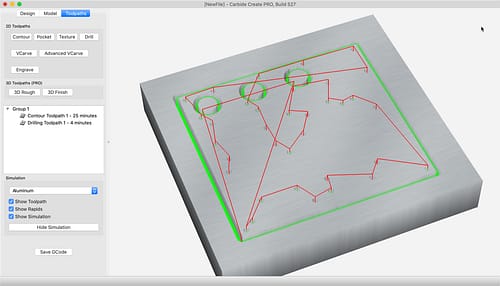
Not everyone starts with professional ambitions. Some people just want to cut a few projects on their Shapeoko or Nomad machine without spending weeks learning software first. For those folks, Carbide Create — developed by Carbide 3D — is exactly what it claims to be: a straightforward, beginner-friendly CNC design tool that gets you from idea to toolpath without unnecessary complexity.
The free version covers basic 2D and 2.5D toolpaths and is more than capable for simple projects like signs, coasters, boxes, and decorative panels. The interface is intentionally simple, with design tools that feel closer to a basic vector editor than a full CAD platform — which is a feature, not a limitation, if you’re new to the whole process. You’re not going to get lost in menus looking for something you didn’t know you needed.
Carbide Create Pro, the paid upgrade, adds 3D modeling and advanced toolpath options, including the ability to import and machine 3D relief models. It’s priced accessibly, and unlike some competitors, doesn’t lock essential features behind enterprise-tier pricing.
One practical tip for beginners: Carbide 3D’s YouTube channel and community forums are genuinely helpful resources. The company has invested in its user community, and that support infrastructure makes a real difference when you’re troubleshooting your first few projects late on a Saturday night.
Best for: Complete beginners, particularly those using Carbide 3D machines like the Shapeoko or Nomad.
Watch out for: Limited capability for advanced work — once you outgrow it, you’ll need to migrate to more powerful software.
5. Mach4 — The Flexible Machine Controller for Serious Hobbyists and Small Shops
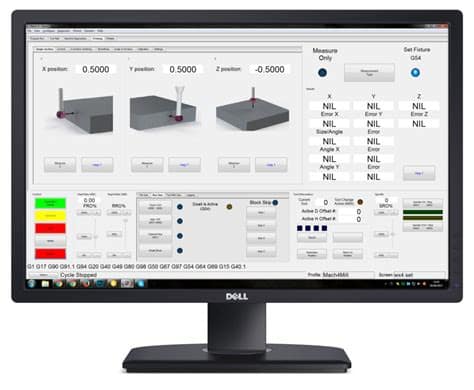
Most CNC software discussions focus on CAD/CAM — the design and toolpath side of things. But there’s another critical piece of the puzzle: the machine controller, which takes your finished G-code and actually drives the motors. Mach4, developed by Newfangled Solutions, is one of the most respected CNC controller software platforms available, and understanding why it matters can save you a lot of headaches down the road.
Mach4 runs on a standard Windows PC and communicates with your CNC machine through a motion controller — a hardware device that handles real-time signal processing. This setup gives hobbyists and small shops access to professional-grade control capabilities without the cost of proprietary CNC controllers. It supports milling, routing, plasma cutting, and lathe operations, and its plugin architecture means it can be extended and customized for specialized applications.
The software’s interface is configurable, allowing shops to create operator screens tailored to their specific machines and workflows. For a small manufacturing business running a custom-built CNC router, Mach4 offers a level of flexibility that proprietary controllers often can’t match. Compared to its predecessor Mach3 (still widely used and discussed in forums), Mach4 offers a more modern architecture and better support for contemporary motion controllers.
Best for: Serious hobbyists building or retrofitting CNC machines, and small shops running custom equipment.
Watch out for: Mach4 is a controller, not a CAM tool — you’ll still need separate software to generate your toolpaths.
6. SolidWorks CAM — The Natural Choice for Engineers Already Using SolidWorks
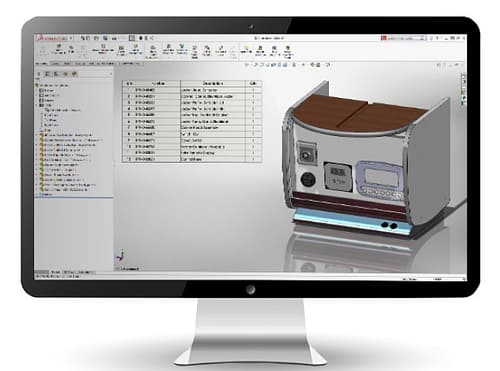
For engineers and product designers working in SolidWorks, adding CAM capability through SolidWorks CAM keeps the entire workflow inside a single familiar environment. Rather than exporting geometry to a separate CAM platform and managing file versions across two applications, SolidWorks CAM allows users to generate toolpaths directly from their native SolidWorks models. It’s one less thing to juggle when you’re already managing a complex project.
The software’s tolerance-based machining (TBM) feature is a genuine differentiator for precision work. It reads the GD&T (geometric dimensioning and tolerancing) annotations embedded in your SolidWorks model and automatically generates toolpaths optimized to meet those specifications — reducing the manual interpretation that can introduce errors in a traditional CAM workflow.
Knowledge-based machining (KBM) is another standout capability. The software learns from previous machining decisions and applies those rules automatically to new features, which can significantly reduce programming time for shops running similar parts repeatedly. Over time, the software effectively builds a database of your shop’s machining preferences and applies them intelligently.
Best for: Engineers and product designers with an established SolidWorks workflow who want integrated CAM capability.
Watch out for: Only relevant if you’re already in the SolidWorks ecosystem — not a practical standalone solution.
7. HSMWorks — Seamless CAM for SolidWorks Users on a Tighter Budget
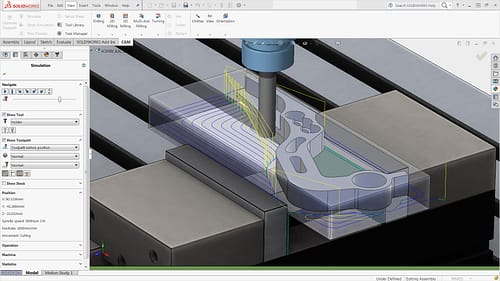
HSMWorks operates as a SolidWorks-integrated CAM solution sitting at a price point below full-featured platforms like Mastercam, while delivering solid 2- to 5-axis machining capabilities. For small job shops and individual machinists who live in SolidWorks but don’t need the full capability set of an enterprise CAM platform, HSMWorks occupies a useful middle ground between entry-level tools and industrial heavyweights.
The toolpath quality is strong, and the interface integrates cleanly into the SolidWorks environment without feeling bolted on. Its post-processor library is broad, covering a wide range of CNC machines and control systems. And because the underlying technology shares DNA with Fusion 360’s CAM engine, users who eventually migrate to Fusion 360 will find the transition relatively smooth — your existing knowledge doesn’t go to waste.
Best for: SolidWorks users who need capable CAM without the cost of top-tier platforms.
Watch out for: Like SolidWorks CAM, it’s only useful within the SolidWorks environment.
8. CamBam — Lightweight and Affordable for Hobbyist CNC Routing and Milling
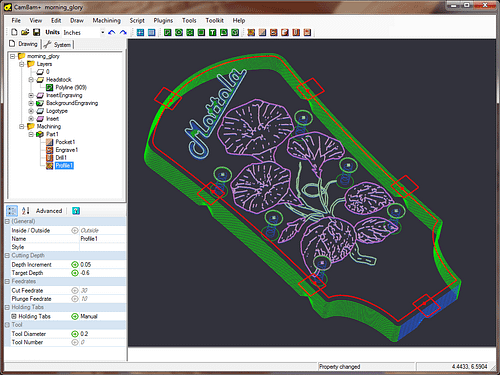
CamBam is a lightweight CAM tool that has built a loyal following among hobbyists who want solid 2D and 2.5D machining capability without paying for features they’ll never use. It’s not flashy. It doesn’t have the marketing budget of Autodesk or Vectric. But it handles basic CNC routing and milling tasks reliably, and at a one-time price that won’t make your wallet flinch. Sometimes that’s exactly what you need.
The application supports common machining operations including profiling, pocketing, drilling, and engraving, and handles DXF and STL imports cleanly. Its plugin system allows community-developed extensions to add functionality, producing a modest but useful ecosystem of add-ons over the years. CamBam’s active user forum is one of its most underrated assets — the community has been around long enough to have documented most of the problems a new user might encounter, which means troubleshooting resources are available even when official documentation runs thin.
Best for: Hobbyists who want a reliable, affordable CAM tool without a subscription or complex feature set.
Watch out for: Development has slowed in recent years — it’s a mature product rather than an actively evolving one.
9. Easel — Browser-Based CNC Software for Absolute Beginners
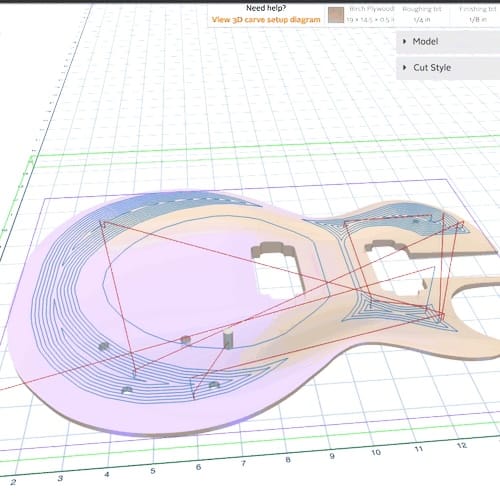
Developed by Inventables for use with their X-Carve CNC router, Easel is a browser-based CAD/CAM tool designed to make the barrier to entry as low as possible. You open a browser, design your project, and send it to the machine — no installation required, no post-processor configuration, no G-code files to manage manually. For someone who just unboxed their first CNC machine and wants to cut something today, Easel delivers on that promise.
The design tools are simple but functional. The built-in material and bit library handles many of the setup decisions automatically, and the workflow from idea to cut is genuinely fast. Easel Pro, the paid tier, adds features like 3D carving, advanced toolpaths, and the ability to import SVG and DXF files from other design tools.
The limitation is clear: Easel is built for accessibility, not sophistication. As your projects become more complex, you’ll outgrow it — at which point Carbide Create, VCarve Pro, or Fusion 360 are natural next steps. Think of it as the on-ramp, not the highway.
Best for: First-time CNC users, particularly those with an X-Carve machine.
Watch out for: Limited depth for anything beyond straightforward 2D and 2.5D work.
10. SheetCam — Purpose-Built for Plasma, Laser, and Waterjet Cutting
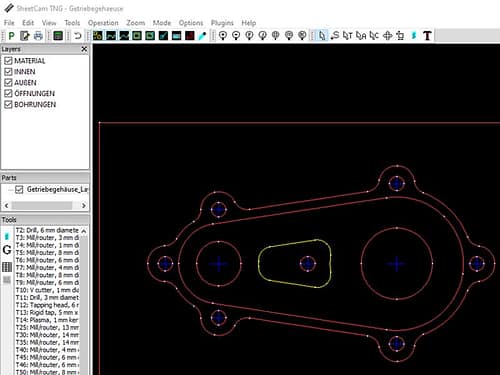
Most CNC software is designed with milling and routing in mind. SheetCam takes a different approach, focusing specifically on the needs of plasma, laser, waterjet, and oxy-fuel cutting operations. If your CNC machine uses a torch or beam rather than a spinning bit, SheetCam deserves a serious look.
The software handles the nuances of sheet-cutting processes that general-purpose CAM tools often get wrong — things like lead-ins and lead-outs (the paths a cutter takes when entering and exiting a cut), pierce delays (the pause needed for a plasma cutter to punch through material before moving), and cut direction relative to kerf. Getting these details right is the difference between a clean cut and a scrapped sheet of steel. SheetCam also supports nesting — arranging multiple parts on a sheet to minimize material waste — which is a practical feature for anyone running production quantities.
At a one-time purchase price, it represents strong value for any plasma or laser cutting shop that processes sheet material regularly.
Best for: Plasma, laser, waterjet, and oxy-fuel cutting operations.
Watch out for: Purpose-built for sheet cutting — not useful for milling, routing, or turning applications.
11. LinuxCNC — Open-Source Machine Control for the Technically Inclined
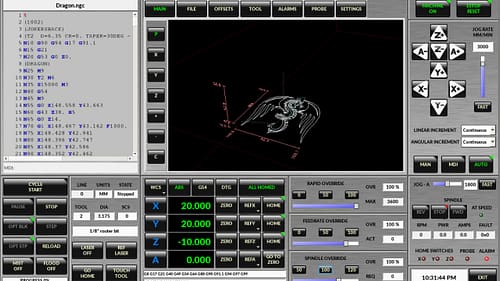
LinuxCNC is a free, open-source CNC controller that runs on the Linux operating system. For the right person — someone comfortable with Linux, willing to invest time in configuration, and building or retrofitting their own CNC hardware — it represents an exceptionally capable platform at zero licensing cost. That’s a powerful combination if you’ve got the technical chops to back it up.
The software supports a wide range of motion control hardware and machine types, including milling machines, lathes, plasma cutters, and delta robots. Its HAL (Hardware Abstraction Layer) system allows deep customization of how the software interacts with hardware, making it popular for unconventional machine builds that don’t fit neatly into the templates assumed by commercial controller software. LinuxCNC’s community is technically sophisticated and active, with extensive documentation — though it assumes a level of comfort with Linux and CNC fundamentals that casual hobbyists may not have.
Best for: Technically skilled hobbyists and builders working on custom or retrofitted CNC machines.
Watch out for: Not beginner-friendly — setup requires genuine technical knowledge, and there’s no commercial support structure if things go sideways.
12. Carveco Maker — Accessible 3D Relief Carving for Creative Makers
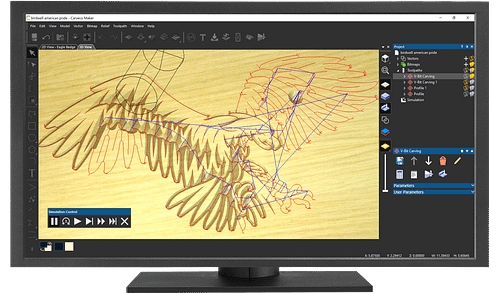
Carveco is a family of software tools built around artistic CNC carving — decorative relief work, sculptural panels, custom furniture details, and the kind of intricate woodworking that takes skill to design and a capable machine to execute. Carveco Maker, the entry-level tier, makes that kind of work accessible to hobbyists through a subscription model that keeps the upfront cost manageable.
The software includes a library of 3D relief models that users can incorporate directly into their projects, which significantly lowers the skill threshold for producing high-quality decorative carving. It handles 2D vector design, 3D modeling, and toolpath generation in a single environment, with a workflow that feels logical once you’ve spent a few hours with it. For woodworkers and creative makers who want to produce work that goes beyond basic routing — without committing to the complexity of full industrial CAM software — Carveco Maker is a compelling option.
Best for: Creative hobbyists and woodworkers focused on decorative and artistic 3D carving.
Watch out for: Subscription-based pricing adds up over time — evaluate whether the annual cost makes sense against your actual usage level.
How to Choose the Right CNC Software for Your Needs
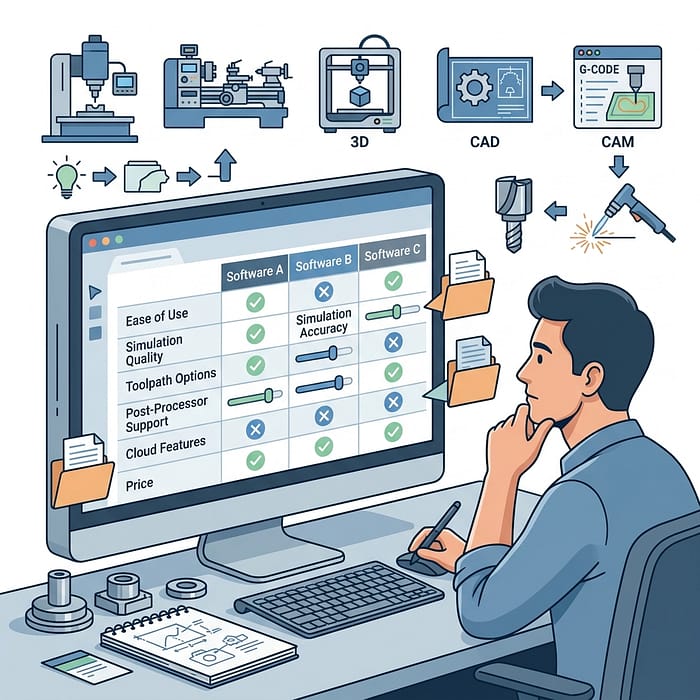
With this many options on the table, it helps to have a clear framework for making the decision. Work through these questions before you commit:
Match the software to your machine type. A plasma cutter has different software needs than a 5-axis milling machine. Start there, before you think about anything else.
Be honest about your skill level. Beginners who start with Mastercam will likely get frustrated before they get productive. Start with something appropriate for where you are now and scale up as your skills grow. There’s no shame in starting simple.
Weigh subscription vs. one-time purchase. Both models have merit. Subscriptions keep software current and spread cost over time; one-time purchases provide long-term cost predictability. Know which model fits your financial situation before you sign up.
Factor in community and support resources. When you’re stuck at 11 PM trying to figure out why your toolpath is gouging your stock, an active forum or thorough documentation is worth its weight in carbide. That support infrastructure matters more than most people realize until they actually need it.
Use free trials before you buy. Most platforms on this list offer free trials or free tiers. Use them. No review — including this one — substitutes for hands-on time with the software on your actual machine, cutting your actual material.
FAQs
What’s the best CNC software for a complete beginner?
Easel or Carbide Create are the most accessible starting points. Both are free to start, require minimal setup, and guide you through the toolpath process without assuming any prior CAM knowledge.
Do I need separate software for design and toolpaths?
Not necessarily. Platforms like Fusion 360, VCarve Pro, and Carbide Create handle both design and toolpath generation in one application. Some workflows do use separate tools — a CAD program for design and a dedicated CAM tool for toolpaths — but integrated options are often simpler for individuals and small shops.
What’s the difference between CAD, CAM, and a CNC controller?
CAD (computer-aided design) is where you create the geometry of your part. CAM (computer-aided manufacturing) takes that geometry and generates the toolpaths and G-code that tell the machine how to move. A CNC controller (like Mach4 or LinuxCNC) interprets that G-code and drives the actual motors on your machine. Some platforms combine two or all three of these functions.
Is free CNC software good enough for serious work?
It depends on what “serious” means for your operation. Fusion 360’s free personal-use tier, Carbide Create’s free version, and LinuxCNC are all capable of producing quality work. The limitations become apparent as projects grow in complexity, but plenty of makers produce impressive results without spending a dollar on software.
How important is post-processor compatibility?
Very. A post-processor translates your CAM software’s toolpaths into G-code that your specific machine controller can read. If your CAM software doesn’t have a post-processor for your machine, you’ll need to create or modify one — which can be a significant technical hurdle. Always confirm compatibility before purchasing any CAM platform.
What’s the most widely used CNC software in professional manufacturing?
Mastercam consistently ranks as one of the most widely deployed professional CAM platforms globally, particularly in job shops and manufacturing environments requiring complex multi-axis machining. SolidWorks CAM and Fusion 360 are also prevalent in engineering-driven environments.
Can I switch CNC software later if my needs change?
Yes, though there’s always a learning curve when switching platforms. Many experienced makers start with beginner-friendly tools and graduate to more powerful software as their skills and project complexity grow. Choosing software with good file import support (DXF, SVG, STEP, STL) makes future transitions easier.
The Right Software Changes Everything
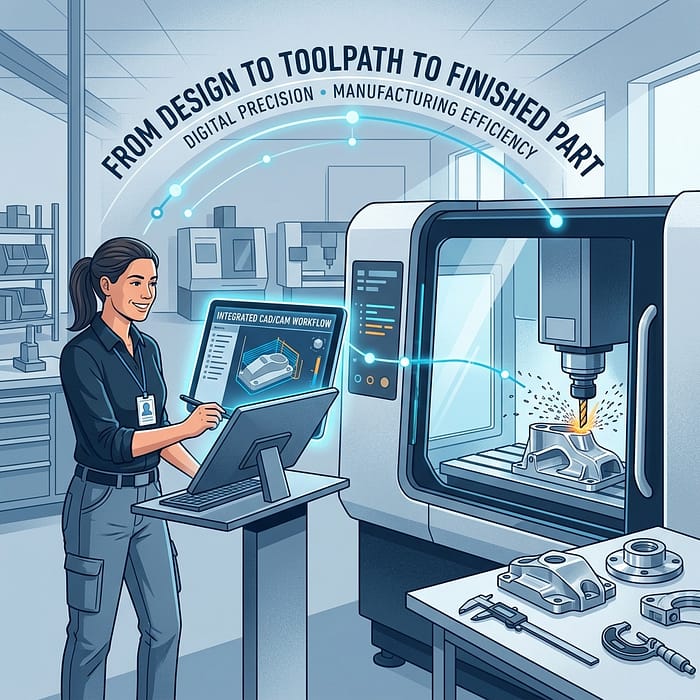
The Best CNC Software for Hobbyists and Pros — 2026 isn’t one single answer — it’s the answer that fits your machine, your skill level, and the work you’re actually doing. That’s a different answer for the garage woodworker cutting signs on weekends than it is for the machinist running tight-tolerance aerospace components on a 5-axis mill, and it should be. Trying to force the wrong tool into the right job is how you end up frustrated, scrapping material, and questioning whether any of this is worth it. It is — you just need the right fit.
The list above covers the full spectrum, from Easel’s beginner-friendly browser interface to Mastercam’s industrial-grade toolpath engine. Each platform earned its place here because it genuinely delivers value for the right user. Start with a free trial. Cut some test parts. Pay attention to where the software fights you and where it gets out of your way. The Best CNC Software for Hobbyists and Pros won’t just run your machine — it’ll help you do better work, faster, with less waste. And in any shop, that’s what matters most.