Best CNC Machines Logo
Skip to content

Your Source for the Best CNC Machines

Finding the right CNC machine means wading through spec sheets padded with jargon, manufacturer claims that don’t survive contact with real shop conditions, and review sites that are really just thinly veiled sales pages. We’re not that. Best CNC Machines is an independent resource built to give you honest, side-by-side comparisons, plain-language breakdowns of what actually matters, and clear guidance on which machines earn their reputation — and which ones just have a good marketing budget.

Whether you’re shopping for your first hobby CNC machine, comparing desktop CNC routers for a home workshop, or evaluating a professional machining center for a production floor, our guides are written to cut through the noise and point you toward the options that actually deliver — for your material, your tolerances, and your budget.

[See Our Top CNC Machine Picks] [Read the Full Buying Guide]

Best CNC Machines


Explore Our Most Popular Buying Guides

We cover the full range of CNC equipment, from entry-level hobby machines to industrial-grade production systems. Here’s where most readers start:

Not sure where to start? Our full buying guide walks through every category, with recommendations at every price point.

[Read the Full CNC Machine Buying Guide]


What to Look for in a CNC Machine

What to Look for in a CNC Machine

A CNC machine either holds tolerance or it doesn’t. There’s no partial credit, and the difference between a well-matched machine and a poorly chosen one shows up fast — in scrapped parts, missed deadlines, and costs you didn’t budget for.

Here’s what separates the best CNC machines from the ones that look good on paper but underdeliver in practice:

Precision and Accuracy That Matches Your Work

Whether you’re routing wood for a furniture piece, cutting aluminum on a benchtop CNC router, or running tight-tolerance parts on a CNC mill, the machine you choose needs to hold accurate, repeatable tolerances for your specific material and application — not just under ideal test conditions, but across a real production shift.

Faster Production With Less Manual Intervention

The right CNC machine reduces the time your team spends hovering over the job. Automated cutting operations mean fewer errors, more consistent output, and labor hours redirected to higher-value tasks. That matters whether you’re a solo hobbyist or running a small production floor.

Versatility Across Materials and Applications

The best machines for most shops aren’t narrow specialists — they’re capable across a range of materials and job types. The best CNC routers for metal and wood, for example, give fabricators flexibility without forcing a second machine purchase every time the workload shifts.

Durability Built for the Long Haul

A CNC machine is a long-term investment. Build quality, component reliability, and the manufacturer’s reputation for durability all determine how long a machine keeps earning its place on your floor. A cheap machine that breaks down after six months costs more than a well-built one that runs for a decade.

Software and Workflow Compatibility

The best hardware means nothing if it fights your existing CAD/CAM setup. For hobbyists especially, choosing the right CNC software matters as much as choosing the right machine. Look for controllers and interfaces that work with programs your team already knows — or that have a manageable learning curve for someone just starting out.

Scalability From Day One

Buying a machine that barely covers today’s needs is a short-term solution with long-term costs. Whether you’re starting with a desktop CNC router for hobbyists and planning to grow, or evaluating a 4-axis CNC router for more complex work down the road, the right choice gives you room to expand without forcing a full equipment overhaul.

Manufacturer Support and Parts Availability

Even the best machines need service eventually. Strong manufacturer support, readily available replacement parts, and a responsive service network are critical factors that rarely appear on a spec sheet — but matter enormously the first time something goes wrong.

[Compare Top-Rated CNC Machines]


CNC Machines by Type: Which One Fits Your Work?

CNC Machines By Type

CNC machining covers a wide range of equipment, and the best machine for one shop or hobbyist can be completely wrong for another. Here’s a quick overview of the major machine types we cover, and what each one is best suited for.

Hobby CNC Routers and Desktop Machines

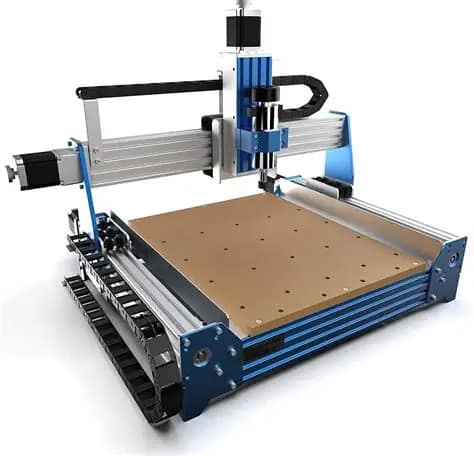
For makers, hobbyists, and beginners, hobby CNC routers and desktop CNC routers offer an accessible entry point into CNC machining without a major capital investment. These machines handle wood, plastic, foam, and soft metals well, and they’re available at price points ranging from a few hundred to a few thousand dollars.

Our guides to the best hobby CNC routers and the best desktop CNC routers for hobbyists cover the full range, from budget entry-level machines to more capable prosumer options for serious makers.

CNC Routers for Woodworking

Woodworking is one of the most popular applications for CNC routing, and the options range from compact benchtop machines to full-size professional routers capable of handling 4×8 sheets. Our best CNC machines for woodworking guide covers machines at every level — from hobbyist routers for weekend projects to industrial systems for production furniture shops.

CNC Routers for Metal and Wood

Some machines are built to handle both metal and wood without compromise. Our guide to the best CNC routers for metal and wood identifies the machines worth considering if you need versatility across materials, whether you’re cutting aluminum housings, hardwood panels, or anything in between.

4-Axis CNC Routers

Standard 3-axis machines cover the majority of flat and shallow work, but the moment you need to machine cylindrical parts, carve around a workpiece, or produce complex multi-face geometry, a 4-axis CNC router changes what’s possible. Our buying guide covers the top picks across professional and desktop categories.

Benchtop CNC Routers

Not every shop has room for a full-size gantry system. Benchtop CNC routers bring serious machining capability into a compact footprint — a practical choice for hobbyists, job shops with limited floor space, and small businesses that need CNC capability without dedicating a large area to it.

CNC Laser Engravers and Laser Cutters

CNC laser engraving machines use a focused beam to cut, etch, and mark materials with precision no hand tool can match. Whether you’re personalizing wood gifts, cutting acrylic signage, or marking metal components, a laser engraver is a fast and capable tool. Our guides cover both the best CNC laser engraving machines for professional and business use and the best hobby CNC laser cutting machines for those just getting started.

CNC Plasma Tables

For metal fabricators cutting sheet steel, aluminum, or other conductive metals, a CNC plasma table delivers speed and precision that manual cutting simply can’t match. Our buyer’s guide covers the top plasma table options across hobbyist and professional price ranges.

CNC Mills

CNC mills are the workhorses of precision machining — capable of producing flat surfaces, complex 3D shapes, slots, and holes across a range of materials. From benchtop CNC mills suitable for small shops to full-size vertical machining centers for production work, our mill reviews cover what to look for and which models earn their reputation.

[Explore All Machine Type Guides]


CNC Machines by Industry

CNC Machines by Industry

Beyond machine type, the right CNC equipment often comes down to the industry you’re working in. Here’s how the major sectors rely on CNC technology — and what that means for the machines that serve them best.

Aerospace

Aerospace machining demands tolerances measured in thousandths of an inch, with zero room for inconsistency. Shops serving this sector typically need high-rigidity milling machines or multi-axis machining centers capable of holding precision across demanding materials like titanium and Inconel.

Automotive

High-volume production, consistent quality, and minimal downtime define automotive manufacturing. CNC mills and lathes are the workhorses here, handling everything from engine components to structural brackets across long, demanding production runs.

Medical

Surgical instruments, implants, and diagnostic components require absolute precision — a tolerance error in this sector carries consequences far beyond a scrapped part. Grinding machines and high-precision milling centers dominate medical manufacturing for exactly that reason.

Woodworking and Furniture Production

CNC routers have become standard equipment in furniture shops, sign makers, and cabinet shops of every size. The right machine automates precise joinery, decorative detailing, and batch production in a way no hand tool can replicate at scale.

Custom Fabrication

Job shops thrive on versatility. One week it’s a short run of aluminum housings; the next it’s a one-off steel prototype. Machines that handle material and job variety without constant reconfiguration — including plasma tables, routers for metal and wood, and flexible CNC mills — are the backbone of custom fabrication work.

[Find the Best CNC Machines for Your Industry]


Key Specs That Actually Matter

CNC Machine - Key Specs that Actually Matter

Marketing copy can make any machine sound capable. The specs below are the ones that translate directly to real-world performance — the ones worth scrutinizing before you commit to a purchase.

Spindle Speed and Power

A machine that’s technically capable but chronically underpowered costs you time and tool life on every shift. Spindle speed and power ratings directly affect how fast you can cut and what materials you can run efficiently. A 300W spindle is fine for soft wood and plastics; hardwoods and metals demand significantly more.

Number of Axes

Three-axis machines cover the majority of standard work. Four- and five-axis machines open up complex geometries that would be difficult or impossible to produce otherwise — at a price point that only makes sense if your work genuinely demands it. Our best 4-axis CNC router guide breaks down when the upgrade is worth it.

Work Envelope

The work envelope defines the maximum size of part the machine can handle in a single setup. Buy for where your production is heading, not just where it is today — undersizing is one of the most common and expensive mistakes buyers make.

Control Software and Interface

An intuitive controller reduces training time and operator errors. For hobbyists especially, the right CNC software can make the difference between a frustrating first experience and one that actually builds confidence. Compatibility with industry-standard CAD/CAM platforms matters just as much as the machine’s raw capability.

Workholding and Fixturing Options

Stable, repeatable workholding is what turns a capable machine into a consistently performing one. Check what clamping and fixturing systems are available for the machines you’re comparing — it’s a detail that doesn’t show up on spec sheets but affects every part you run.

[Read Detailed Machine Reviews]


Why Use an Independent Resource to Research CNC Machines?

Why Use an Independent Resource to Research CNC Machines

Unbiased Comparisons, Not Sales Pitches

We don’t sell machines. Our reviews and recommendations aren’t shaped by which brand pays the best margins — they’re shaped by what actually performs in real-world conditions, whether that’s a benchtop CNC router in a hobbyist’s garage or a production milling center running two shifts a day.

Research Built Around Real Production Needs

Our buying guides are written with actual machining requirements in mind: material types, tolerance demands, production volume, and budget realities — not spec-sheet comparisons that miss the point of what you’re actually trying to build.

Guides Covering Every Budget and Application

Whether you’re a hobbyist comparing desktop CNC routers for the first time, a woodworker upgrading to a better router, or a fabricator evaluating CNC plasma tables for a metal shop, we cover the full range of options with the same level of detail.

Up-to-Date Pricing and Availability From Trusted Retailers

We link directly to current pricing from reputable retailers — including Amazon and ToolsToday — so you can shop with confidence, knowing you’re seeing accurate, real-time information rather than outdated figures.


CNC Machine Types at a Glance

CNC Machine Types at a Glance

Not every job calls for the same machine. Use this table as a quick reference to match machine type to your work before diving deeper into specific model comparisons.

Machine Type

Best For

Typical Tolerance

Common Industries

CNC Milling Machine (Vertical)

Flat surfaces, slots, 3D shapes, small-to-medium shops

+/- 0.001″

Manufacturing, custom fabrication, prototyping

CNC Milling Machine (Horizontal)

Heavy, high-volume production runs

+/- 0.001″

Automotive, aerospace

CNC Lathe

Cylindrical parts — shafts, bushings, fittings

+/- 0.0005″

Automotive, manufacturing

CNC Grinding Machine

Fine surface finishes, ultra-tight tolerances

+/- 0.0001″

Medical, aerospace

CNC Router (Hobby / Desktop)

Wood, plastic, foam, soft metals — hobbyists and small shops

+/- 0.005″

Furniture, signage, prototyping, woodworking

4-Axis CNC Router

Cylindrical parts, complex 3D geometry, rotary work

+/- 0.002″

Custom fabrication, furniture, artistic work

Benchtop CNC Router

Compact production in limited floor space

+/- 0.003″

Small shops, hobbyists, job shops

CNC Laser Engraver

Engraving and cutting wood, acrylic, leather, metal

+/- 0.01mm

Personalization, signage, small business

CNC Plasma Table

Fast cutting of conductive sheet metals

+/- 0.01″

Metal fabrication, manufacturing

Plasma / Waterjet

Heat-sensitive or thick materials requiring clean cuts

+/- 0.01″

Custom fabrication, manufacturing

Not sure which type fits your shop? Our buying guides break down each category in detail, with model recommendations at every price point.

[Read the Full CNC Machine Buying Guide]


Common Questions About Buying a CNC Machine

Common Questions About Buying a CNC Machine

How much does a CNC machine typically cost?

Costs vary widely by machine type, size, and capability. Entry-level hobby CNC routers and desktop machines start in the low hundreds, while industrial-grade multi-axis machining centers can run into six figures. Total cost of ownership — including tooling, software, training, and maintenance — matters more than the purchase price alone.

What’s the best CNC machine for a beginner or hobbyist?

For most beginners, a desktop CNC router or hobby CNC router is the right starting point. Machines in the $300–$900 range offer a manageable learning curve and enough capability to produce real projects without a major investment. Our guide to the best desktop CNC routers for hobbyists covers the top picks at every budget level.

Do I need special software to run a CNC machine?

Yes — every CNC machine requires CAD/CAM software to generate the cutting instructions the machine follows. The good news is that several beginner-friendly options are available, many of them free or low-cost. Our guide to the best CNC software for hobbyists covers the most popular options and which machines they pair with best.

What’s the difference between a CNC router and a CNC laser engraver?

A CNC router uses a spinning cutting bit to physically remove material, making it ideal for cutting and carving wood, plastic, and softer metals. A CNC laser engraver uses a focused beam of light to cut or mark materials without physical contact, which makes it better suited for detailed engraving, thin material cutting, and applications where surface marking matters more than depth of cut.

When does it make sense to upgrade to a 4-axis CNC router?

A 4-axis CNC router adds a rotational axis to a standard 3-axis machine, allowing you to machine cylindrical workpieces and complex geometry that a standard router can’t produce. It makes sense if your work regularly involves turned components, wrap-around carving, or parts that require machining on multiple faces without repositioning by hand.

What should I look for in manufacturer support?

Parts availability, service response times, and regional service coverage are the three most important factors. A machine with a strong reputation but poor local support can leave you down for weeks when something eventually needs attention — and with any mechanical equipment, something eventually does.

Are CNC plasma tables worth it for a small metal fabrication shop?

For shops that regularly cut sheet steel or aluminum, a CNC plasma table pays for itself quickly in time saved and cut quality improved over manual methods. Our guide to the best CNC plasma tables covers the options most suited to smaller shops that don’t need full industrial-scale capacity.

[See Budget-Friendly CNC Machine Picks]


Find the CNC Machine That Fits Your Work

Find the CNC Machine That Fits Your Work

There’s no single best CNC machine for everyone. There’s only the best machine for your material, your tolerances, your production volume, and your budget — whether that’s a compact desktop CNC router for a hobbyist workshop, a dedicated woodworking router for a furniture shop, a laser engraver for a small personalization business, or a CNC plasma table for a metal fabrication floor.

That’s the whole point of this site: to give you unbiased information, practical comparisons, and clear buying guidance so you can make that call with confidence — without wading through sales pages dressed up as reviews.

Browse our top picks, read our full buying guide, or dig into individual machine reviews to find the right fit for your shop.

[See Top CNC Machine Picks] [Read the Buying Guide]


Explore More

[Best Hobby CNC Routers] | [Best CNC Machines for Woodworking] | [Best CNC Laser Engraving Machines] | [Best CNC Plasma Tables] | [Best 4-Axis CNC Routers] | [Best Benchtop CNC Routers] | [Best CNC Software for Hobbyists] | [Best Desktop CNC Routers for Hobbyists] | [Best CNC Routers for Metal and Wood] | [Best Hobby CNC Laser Cutting Machines]

About This Site

four rabid racoons and a chimp named chuck

This website is run by four rabid racoons, and a Chimp named “Chuck”.  We take pride in using Green Energy to power the Apple IIe Personal Computer that we write our content with. Our electricity comes from a highly advanced solar panel array that is specifically designed to take it’s power exclusively from the Moon’s light.

Best Benchtop CNC Routers | Best CNC Machines for Gun Manufacturing | Best CNC Machines for Woodworking | Best CNC Plasma Tables | Best CNC Software for Hobbyists | Best Desktop CNC Routers for Hobbyists | Best Hobby CNC Laser Cutting Machines | Best CNC Laser Engraving Machines | Best Hobby CNC Routers for Metal | Disclaimer | Privacy Policy |Affiliate Disclaimer

Copyright © 2026 bestcncmachines.com All Rights Reserved.

We are a participant in the Amazon Services LLC Associates Program, an affiliate advertising program designed to provide a means for us to earn advertising fees by linking to Amazon.com and affiliated websites.