
If you’ve searched “cheapest CNC for milling 303 stainless steel” and ended up staring at a wall of hobbyist routers that claim to cut metal, you’re not alone — and you’re right to be skeptical. Most desktop CNC machines are designed for wood, plastic, and soft aluminum. Stainless steel, even the relatively machinable 303 grade, is a fundamentally different machining challenge. It work-hardens, eats cutting tools, and demands rigidity and spindle torque that budget router-style machines simply don’t deliver.
This guide cuts through the noise. We’ve ranked five real CNC machines — ranging from purpose-built metal mills to capable entry-level options — by price, stainless steel capability, and honest buyer fit. Whether you’re a serious hobbyist, a small-shop owner, or a maker doing occasional light stainless work, there’s a machine here that matches your needs. The key is knowing which one before you spend.
Quick answer: If your budget allows, the Langmuir Systems MR-1 ($5,195) is the best value CNC for genuine 303 stainless milling. For lighter work on a tighter budget, the Carbide 3D Nomad 3 ($2,799) is the most refined option in its class. Budget alternatives exist, but come with real limitations.
Frequently Asked Questions
Can a cheap desktop CNC mill 303 stainless steel?
Yes — but with significant limitations. Most router-style desktop CNCs lack the spindle torque and frame rigidity that stainless demands. You can achieve shallow passes and light features in 303 with the right carbide tooling and conservative feeds, but true material removal requires a purpose-built metal mill. If stainless is your primary material, budget upward.
What is the minimum CNC machine price for milling stainless steel?
The AnoleX 3030-Evo Max starts at around $539 and can perform very shallow stainless work with the right tooling. For genuine milling capability — real pockets, profiles, and repeatable results — expect to spend at least $5,000 on the Langmuir MR-1.
What grade of stainless steel is easiest to machine on a small CNC?
303 stainless is the most machinable stainless steel grade. It contains sulfur additives that improve chip breakage and reduce tool wear compared to 304 or 316. If you have a choice, always use 303 for small CNC work.
What end mills should I use for stainless steel on a desktop CNC?
Use solid carbide end mills with AlTiN coating, an upcut geometry, a corner chamfer for strength, and a 30-degree helix angle. Small-diameter tools (1/8″ or less) paired with shallow depths of cut and cutting fluid give the best results on smaller machines.
Do I need coolant to mill 303 stainless on a desktop CNC?
Yes. Stainless work-hardens when it runs dry. Even a simple misting system or hand-applied cutting fluid significantly extends tool life and improves surface finish. Don’t attempt stainless without it.
1. Langmuir Systems MR-1 — Best CNC for 303 Stainless Steel Under $6,000
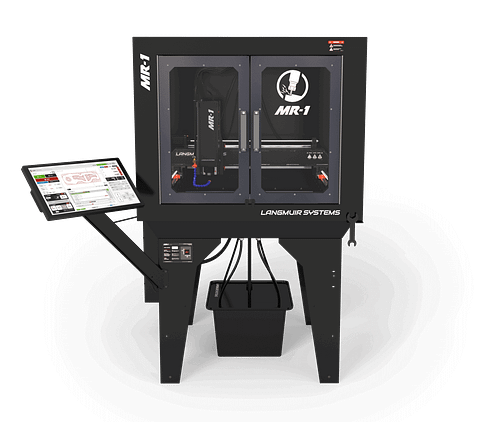
The MR-1 is the machine serious hobbyists keep coming back to when the real question is: can it actually cut stainless? The answer, uniquely for a machine in this price range, is yes — by design.
Specs
- Frame: Concrete-reinforced steel gantry
- Spindle: 3.4 HP AC servo, up to 6,000 RPM
- Guideways: 20mm linear rails
- Weight: 700+ lbs
- Work Envelope: ~33″ x 16″ x 5″
Price and Where to Buy
Starting at $5,195, available directly from langmuirsystems.com. Ships as a kit; assembly required.
Why It Works for 303 Stainless Steel
Langmuir explicitly rates the MR-1 for 303, 304, and 17-4 stainless steel — backed by machining videos and detailed feeds-and-speeds documentation. The concrete-poured gantry provides the vibration damping and rigidity that stainless demands. The high-torque servo spindle maintains consistent speed under load, which is exactly what you need to prevent work-hardening.
Pros and Cons
Pros: Purpose-built for metal, proven stainless capability, large and active user community, US-based support, serious rigidity at an accessible price.
Cons: Kit assembly takes time (typically a full weekend or more), the work envelope is smaller than industrial mills, and $5,195 is a real investment for a hobbyist. Still, for anyone asking what the smallest, cheapest CNC for milling 303 stainless steel actually looks like in practice — this is it.
2. Tormach PCNC 440 — Best Small CNC Mill for Professional and Multi-Material Use
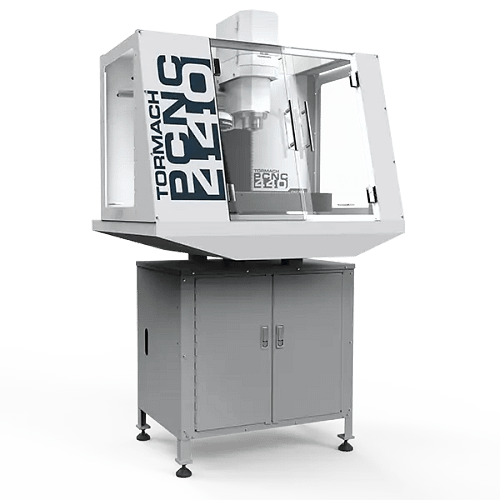
If the MR-1 is the serious hobbyist’s answer, the Tormach PCNC 440 is the small-shop professional’s answer — a machine with decades of proven metalworking performance behind it.
Specs
- Frame: Cast iron
- Spindle: R8, up to 10,000 RPM
- Drives: Ball screws on all axes
- Control: PathPilot CNC software
- Work Envelope: 10″ x 6.25″ x 10″
Price and Where to Buy
Starting at $8,995, available directly from tormach.com.
Why It Works for 303 Stainless Steel
The PCNC 440’s cast-iron frame and precision ball screws give it machining rigidity that router-style desktop machines can’t approach. Tormach’s published testing covers stainless steel milling across multiple grades, and the platform has been used in university machine shops, R&D labs, and small job shops for years. It’s the most capable machine on this list and the only one that can genuinely serve as a do-it-all production mill for a small business.
Pros and Cons
Pros: Industry-standard build quality, proven stainless and titanium capability, intuitive PathPilot control, strong dealer network and support ecosystem.
Cons: The most expensive option on this list; larger footprint than other entries; overkill for occasional or light stainless work. If your budget allows and you’re running a real operation, it’s worth every dollar.
3. Carbide 3D Nomad 3 — Best Enclosed Desktop CNC Under $3,000 for Light Stainless Work
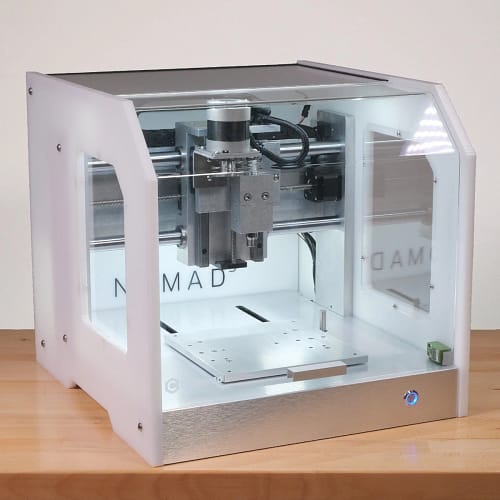
The Nomad 3 fills a specific niche: a polished, fully integrated desktop CNC with a track record, real software support, and documented community results on soft metals — including careful stainless steel work.
Specs
- Frame: Aluminum
- Spindle: 70W brushless, up to 10,000 RPM
- Drives: Ball screws on all axes
- Work Envelope: 8″ x 8″ x 3″
- Enclosure: Yes — fully enclosed
Price and Where to Buy
$2,799, available directly from carbide3d.com. Ships fully assembled, ready to run.
Stainless Steel Capability — With Important Caveats
Carbide 3D officially rates the Nomad 3 for aluminum, brass, copper, and mild steel. They are deliberately careful about stainless claims — and that honesty actually builds trust. Here’s the real picture: with small-diameter AlTiN-coated carbide end mills, very shallow depths of cut, conservative feed rates, and cutting fluid, the Nomad 3 can make productive passes in 303 stainless steel. The machining community has documented this. It will not handle deep pockets or aggressive material removal, but for small parts, thin-section profiling, and shallow 2D features in 303, it’s a legitimate option if you work within its limits.
Pros and Cons
Pros: Ships ready to run, fully enclosed, strong software ecosystem (Carbide Create + Carbide Motion), active support community, quiet enough for shared workspaces.
Cons: The 70W spindle is the real constraint — it’s not built for stainless production work. At $2,799, it’s nearly halfway to an MR-1 without approaching MR-1 metal-cutting capability. Best suited to makers who value the refined all-in-one experience and can adapt their workflow to the machine’s limits.
For user reviews, and to buy online for best pricing and fast delivery – Click Here
4. TAIG 2019CR Micro Mill — Best for Experienced DIY Builders
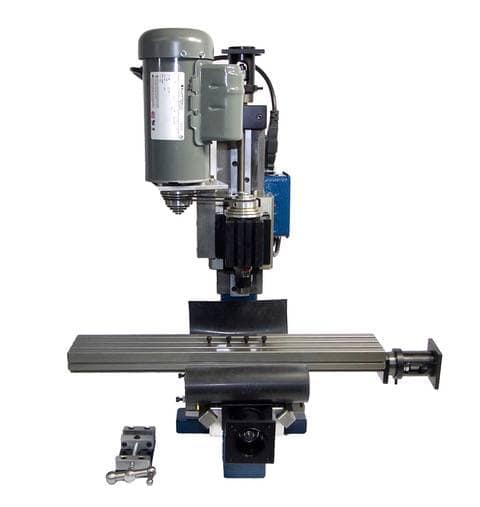
The TAIG Micro Mill has been a fixture in the hobby machining world since the late 1970s. It’s often cited as one of the cheapest paths to CNC stainless milling — but that headline requires careful reading.
Specs
- Frame: Steel and aluminum
- Spindle: ER16 collet, variable speed
- Drives: 1/2-20 lead screws (precision upgrade available)
- Footprint: 22″ x 21″
- Work Envelope: 12″ x 5.5″ x 6″
Price and Where to Buy
Starting at $1,211 (base unit only), available from taigtools.com. Note: this price does not include stepper motors, a controller, or power electronics.
CNC Conversion — The Real Cost
This is where the TAIG’s value proposition gets complicated. The 2019CR is “CNC-ready,” meaning the mechanical foundation accepts NEMA 23 stepper motors and a standard CNC controller — but you supply all of that yourself. Add a quality stepper set, a motion controller, a spindle motor upgrade, and proper electronics, and the real cost can climb well past $2,000–$2,500. That’s still below the Nomad 3 — but the build process demands real technical skill and weeks of work.
For stainless steel: the TAIG can mill 303 with conservative feeds, proper AlTiN carbide end mills, and careful technique. Machinists have been proving this for decades. Its light-duty construction means shallow passes, but the results are real.
Pros and Cons
Pros: Proven mechanical platform, US-made, long track record with experienced hobby machinists, highly customizable, small footprint.
Cons: The listed price is misleading — true cost is significantly higher once fully equipped. Assembly and integration require genuine technical skill. Not a plug-and-play solution; it’s a project. Best for builders who enjoy the build process as much as the machining.
5. AnoleX 3030-Evo Max — Most Affordable Option for Very Light Stainless Work
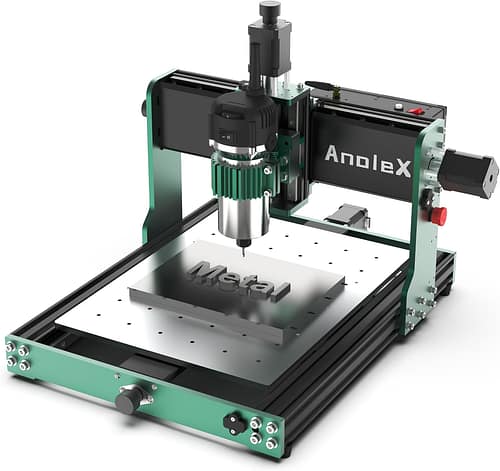
At under $600, the AnoleX 3030-Evo Max is the cheapest machine on this list that explicitly lists stainless steel in its materials capability. That distinction comes with equally explicit limits.
Specs
- Frame: All-metal with dual steel linear guides
- Spindle: 800W trim router
- Drives: Ball screws on all axes
- Work Area: ~300mm x 300mm
- Controller: GRBL-based
Price and Where to Buy
Approximately $539–$599, available on Amazon and other online retailers.
Stainless Steel Capability — With Important Caveats
The product listing states suitability for aluminum, brass, and stainless steel. To be direct: this is a router-style machine, not a true CNC mill. The 800W trim router spindle is not comparable to the purpose-built mill spindles on any other machine in this guide. What the AnoleX can realistically do on 303 stainless is shallow surface engraving, light thin-section passes, and small 2D features — with the right AlTiN-coated carbide end mills, proper fixturing, cutting fluid, and very conservative feeds and speeds. Aggressive cuts will stall the spindle or break tools.
Think of this as a starting point for very light stainless work — not a production tool, and not a substitute for a real metal mill.
Pros and Cons
Pros: Genuinely affordable, all-metal construction, ball screws on all axes, widely available with fast shipping.
Cons: Router-style design limits real stainless capability to shallow, slow passes. Significant learning curve for dialing in stainless on this platform. Requires quality stainless-rated tooling to have any chance of success.
For user reviews and to buy online for best pricing and fast delivery – Click Here
Don’t Skip the Tooling — It’s Half the Battle
Regardless of which machine you choose, the cutting tool matters as much as the machine itself when milling 303 stainless steel. Toolstoday.com carries Amana Tool’s solid carbide spiral end mills with AlTiN coating, specifically engineered for steel, stainless steel, and non-ferrous metals. These feature upcut geometry, a corner chamfer for added strength, a 30-degree helix angle, and a coating engineered to handle the heat and hardness stainless generates.
The rule is simple: a capable machine with cheap tooling produces broken end mills. A modest machine with proper stainless-rated tooling produces actual parts. Don’t cut corners on the cutters.
CNC Machine Comparison Table: 303 Stainless Steel Milling
|
Machine |
Starting Price |
Stainless Steel Reality |
Rigidity Level |
Best For |
Verdict |
|---|---|---|---|---|---|
|
$5,195 |
Explicitly rated for 303, 304, 17-4 SS |
High — concrete-reinforced steel gantry |
Serious hobbyists, dedicated metal work |
✅ Best value for real stainless milling |
|
|
$8,995 |
Proven with stainless, steel, and titanium |
Very High — cast-iron frame |
Small shops, multi-material production |
✅ Most capable machine on this list |
|
|
$2,799 |
Light passes only; no heavy cuts |
Medium — aluminum frame, ball screws |
Desktop makers, small precise parts |
⚠️ Works within limits; patience required |
|
|
$1,211+ (base only) |
Possible with conservative feeds and right tooling |
Medium — proven but light duty |
Experienced DIY builders |
⚠️ Project machine; true cost is higher |
|
|
~$539–$599 |
Shallow engraving and thin-section work only |
Low-Medium — router-style platform |
Budget makers doing very light stainless work |
⚠️ Cheapest option; very limited capability |
Final Verdict: Which CNC Should You Buy for 303 Stainless Steel?
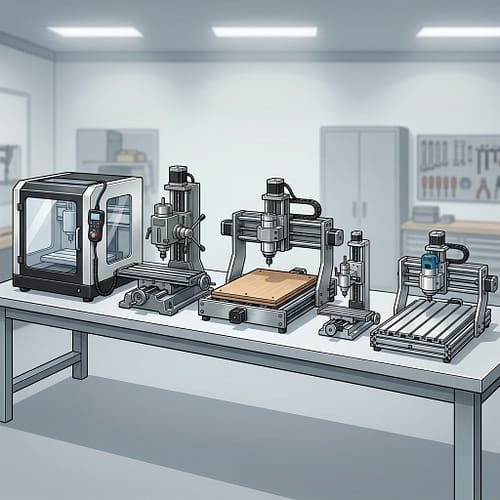
The right machine depends on what “milling stainless steel” actually means for your use case.
For genuine 303 stainless steel milling with real material removal — the kind that produces actual machined parts — there are two honest answers: the Langmuir Systems MR-1 at $5,195, which is the best value for a serious hobbyist or small shop that wants true metalworking capability; and the Tormach PCNC 440 at $8,995, which brings proven versatility, professional-grade build quality, and the track record that small businesses need.
For lighter stainless work on a tighter budget — shallow features, small parts, engraving-depth cuts — the Carbide 3D Nomad 3 offers the best combination of software refinement, community support, and realistic stainless capability under $3,000. It demands patience and the right tooling, but experienced makers get real results from it.
For the lowest possible entry cost, the AnoleX 3030-Evo Max is the cheapest machine that can touch stainless at all, with the right carbide end mills and enough patience. The TAIG 2019CR is the better long-term mechanical platform of the two, but its true cost is higher than it appears, and it’s only worth pursuing if you enjoy the build process.
The most important takeaway: matching the machine honestly to your use case — and pairing it with quality stainless-rated carbide tooling — matters far more than chasing the lowest price tag. Buy the machine that fits your actual work. It will repay you in finished parts, saved end mills, and a great deal less frustration.
More FAQs About CNC Milling 303 Stainless Steel
Is 303 stainless steel easier to machine than 304?
Yes. 303 stainless is the most free-machining stainless grade available. Its sulfur content improves chip formation and reduces the cutting forces required, making it meaningfully more forgiving on small CNC machines than 304 or 316.
What spindle speed should I use to mill 303 stainless steel?
Use lower spindle speeds than you would for aluminum — typically 3,000–6,000 RPM for small-diameter carbide end mills on a desktop machine. Higher speeds generate more heat, which accelerates work-hardening and tool wear.
What feed rate should I use for 303 stainless on a small CNC?
Start conservative: 2–5 IPM (inches per minute) for a 1/8″ carbide end mill at shallow depth. Work-hardening happens when your feed rate is too slow, not just too fast — avoid dwelling or rubbing the tool.
How deep can I cut on each pass when milling 303 stainless?
On a desktop machine like the Nomad 3 or AnoleX, limit axial depth of cut to 5–10% of your tool diameter. For a 1/8″ end mill, that means 0.006″–0.012″ per pass. True metal mills like the MR-1 can take significantly more aggressive cuts.
Do I need a flood coolant system for stainless steel milling?
A flood system is ideal but not always required on small machines. A misting coolant system or manual application of cutting oil (applied frequently) is effective on machines like the Nomad 3 or TAIG and significantly better than running dry.