
The 10 best CNC machines for woodworking in 2026 range from budget hobby routers like the Genmitsu 3018-PROVer to industrial workhorses like the ShopSabre PRO. The right pick depends on your cutting area, spindle power, software needs, and budget—not just the sticker price. So, let’s dive in to the best CNC machines for wood.
Let me level with you before we get sawdust everywhere: the 10 best CNC machines for woodworking aren’t the ones with the flashiest marketing or the most YouTube hype. They’re the ones that show up, do honest work, and don’t leave you cussing at a control screen at 11 p.m. I’ve spent enough time around shops—real shops, with real callouses and real deadlines—to know that a machine is only as good as the work it lets you finish.
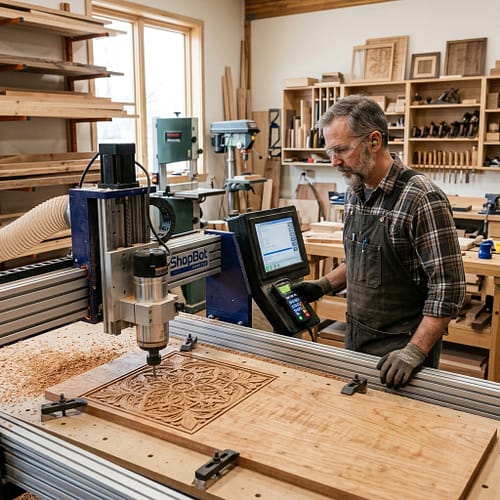
Woodworking has changed. The craft that once lived and died by a steady hand and a sharp chisel now shares the bench with stepper motors, spindles, and G-code. That’s not a bad thing. Automation hasn’t replaced the woodworker; it’s given the woodworker a bigger swing. A CNC machine can carve the same cabinet door fifty times without a single one drifting off spec—something no human wrist can promise after lunch.
This guide is here to cut through the noise. We’ll cover what CNC machines actually do, the features that matter, and the ten machines worth your hard-earned money in 2026. Whether you’re a weekend hobbyist or running a full production floor, there’s a machine here with your name on it. Let’s get to work.
What Are CNC Machines and Why Do They Matter for Woodworking?

CNC stands for Computer Numerical Control. In plain English, it’s a machine that takes a digital design and turns it into physical cuts, carvings, and shapes—automatically. You feed it a file, it moves cutting tools along programmed paths, and out comes a finished piece.
Here’s why that matters for woodworking:
- Precision: A CNC machine can hold tolerances down to a few thousandths of an inch. Try doing that freehand.
- Speed: Once the design is dialed in, the machine runs while you do something else. That’s leverage.
- Repeatability: The hundredth part looks exactly like the first. For anyone selling product, that consistency is money.
- Cost-effectiveness: Less material waste, fewer mistakes, and more output per hour. The math adds up fast.
CNC technology has quietly transformed modern woodworking. Small shops now compete with big manufacturers. Hobbyists produce work that used to require a full trade apprenticeship. The barrier to entry didn’t disappear—it just moved from your hands to your willingness to learn the software.
What Features Should You Consider When Choosing a CNC Machine?
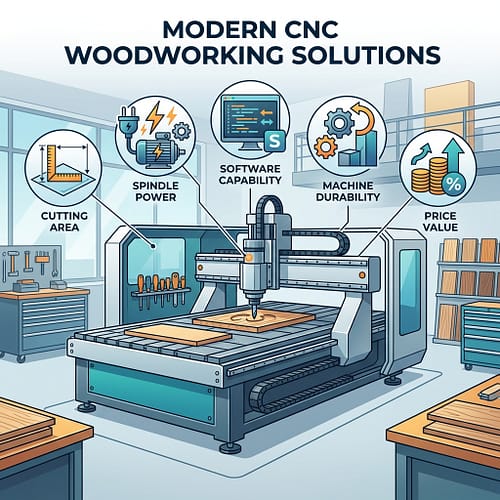
Buying a CNC machine without knowing what to look for is like buying a truck by color alone. Here’s what actually earns its keep.
How big is the cutting area and work envelope?
The cutting area determines the largest piece you can machine in one pass. Hobby machines might offer a modest 12″ x 12″ bed, while professional gantry systems handle full 4′ x 8′ sheets of plywood. Buy for the work you actually do—not the work you daydream about.
How much spindle power and speed do you need?
Spindle power, measured in watts or horsepower, decides how hard and fast you can cut. A 300-watt spindle handles soft woods and light detail work. Hardwoods, thick stock, and production runs demand 1.5 HP or more. Higher spindle speeds (RPM) also give cleaner cuts on fine detail.
Is the software compatible and easy to use?
A machine is only as good as the software driving it. Look for compatibility with common design programs like Fusion 360, VCarve, or Aspire. Beginners should prioritize an intuitive workflow—fighting clunky software will kill your enthusiasm faster than a dull bit.
How’s the build quality and durability?
Steel frames beat aluminum, which beats MDF or plastic. A rigid machine cuts cleaner, vibrates less, and lasts longer. Cheap builds flex under load, and flex means sloppy cuts. You feel the difference the first time you push a machine hard.
What’s the price range and return on investment?
Set a realistic budget, then think past the sticker. A $500 machine that sits broken doesn’t beat a $3,000 machine that runs for a decade. If the machine earns money, calculate how fast it pays for itself. That number tells the real story.
The 10 Best CNC Machines for Woodworking in 2026
Here are ten machines worth your attention this year, sorted roughly from entry-level to industrial.
1. Genmitsu 3018-PROVer
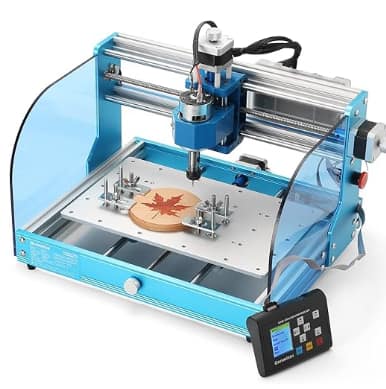
- Specs: ~11.8″ x 7″ x 1.8″ work area, 300W spindle
- Pros: Affordable, great for learning, solid community support
- Cons: Small work area, limited to soft materials
- Price range: $300–$450
- Best for: Absolute beginners testing the waters
2. SainSmart Genmitsu PROVerXL 4030
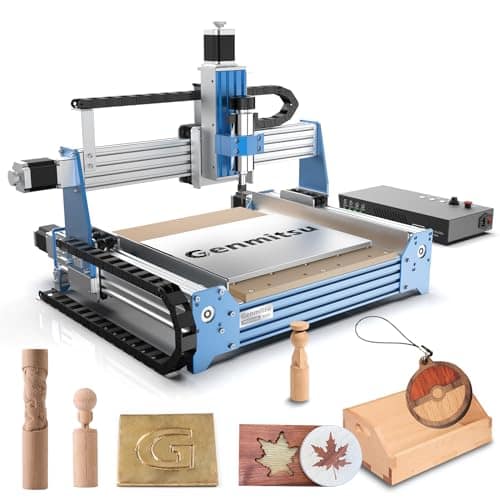
- Specs: ~15.7″ x 11.8″ x 4″ work area, upgradeable spindle
- Pros: Larger bed than entry hobby machines, rigid frame
- Cons: Assembly takes patience
- Price range: $700–$900
- Best for: Serious hobbyists ready to grow
3. Shapeoko 4 (Carbide 3D)
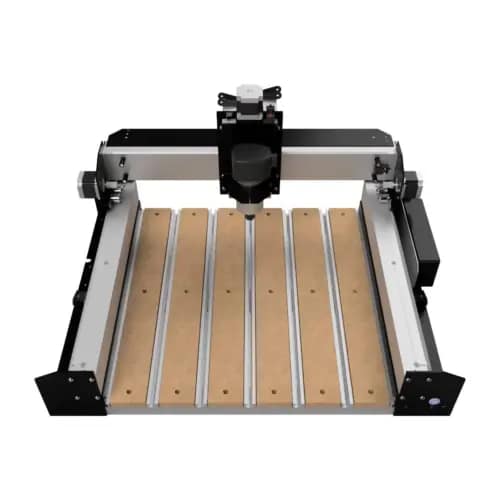
- Specs: Standard and XL/XXL bed options, Carbide Compute board
- Pros: Excellent documentation, reliable, strong community
- Cons: Spindle upgrade recommended for heavy use
- Price range: $1,500–$2,500
- Best for: Prosumers wanting reliability
For user reviews and to buy the Shapeoko 4 online for best pricing and fast delivery – Click Here
4. Onefinity Woodworker
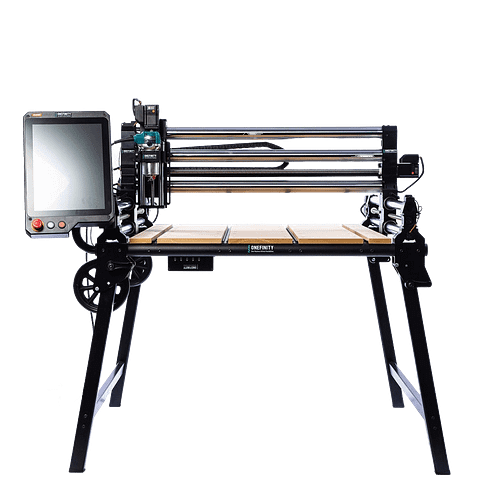
- Specs: ~32″ x 32″ work area, ball-screw driven
- Pros: Rigid ball-screw motion, no gantry sag, easy setup
- Cons: You supply your own spindle/router
- Price range: $2,000–$3,000
- Best for: Hobbyists demanding pro-level accuracy
You can find the Onefinity CNC machines here.
5. Inventables X-Carve Pro
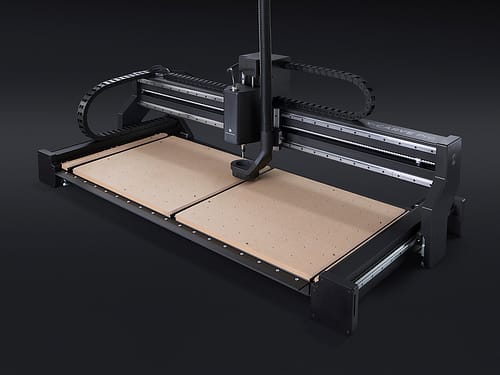
- Specs: 4′ x 2′ work area, 1.5 HP spindle
- Pros: Sturdy steel frame, plug-and-play Easel software
- Cons: Software subscription for advanced features
- Price range: $5,000–$6,500
- Best for: Small businesses scaling up
Learn more about the Inventables X-Carve Pro here.
6. Axiom Iconic Series

- Specs: Multiple bed sizes, industrial-grade spindle
- Pros: Heavy-duty build, automatic tool changing on higher models
- Cons: Premium pricing
- Price range: $7,000–$15,000
- Best for: Professional cabinet and furniture shops
For user reviews, and to buy the Axiom Iconic online for best pricing and fast delivery – Click Here
7. Laguna Tools Swift / SmartShop
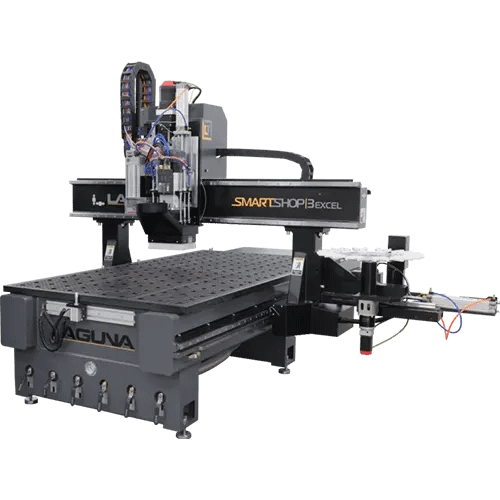
- Specs: 4′ x 4′ and larger, powerful HSD spindles
- Pros: Excellent support network, robust construction
- Cons: Requires dedicated shop space
- Price range: $12,000–$25,000
- Best for: Growing production workshops
Learn more about the Laguna Tools Swift and Smartshop here.
8. ShopSabre PRO Series
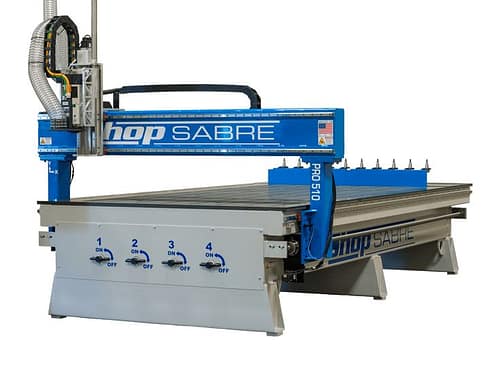
- Specs: 4′ x 8′ and up, servo motors, industrial spindles
- Pros: American-built, blazing fast, built for daily abuse
- Cons: Significant footprint and investment
- Price range: $20,000–$40,000
- Best for: Full-time production floors
9. AXYZ / CNC Factory Series
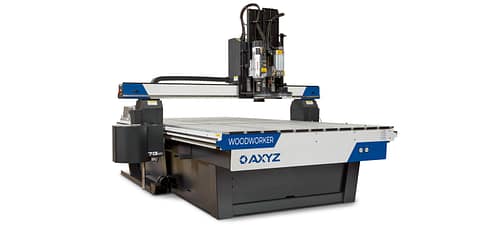
- Specs: Fully customizable large-format tables
- Pros: Configurable for niche production, strong dust management
- Cons: Long lead times, complexity
- Price range: $25,000–$50,000+
- Best for: Specialty and high-volume manufacturers
10. Biesse Rover Series
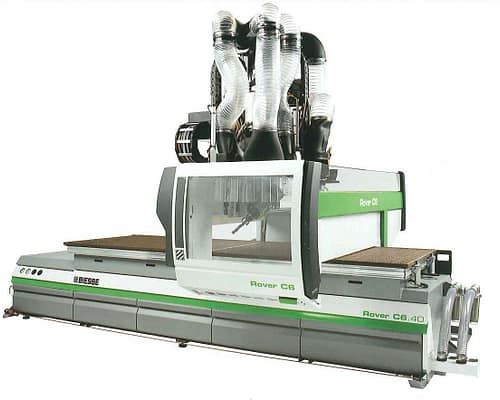
- Specs: Full-sheet processing, automatic tool changers, nesting capable
- Pros: Industrial powerhouse, integrates with automated workflows
- Cons: Enterprise pricing and infrastructure needs
- Price range: $50,000+
- Best for: Large-scale manufacturers and enterprises
Comparison Table
|
Machine |
Work Area |
Spindle Power |
Price Range |
Best For |
|---|---|---|---|---|
|
11.8″ x 7″ |
300W |
$300–$450 |
Beginners |
|
|
15.7″ x 11.8″ |
Upgradeable |
$700–$900 |
Serious hobbyists |
|
|
Up to XXL |
Router/spindle |
$1,500–$2,500 |
Prosumers |
|
|
32″ x 32″ |
BYO spindle |
$2,000–$3,000 |
Accuracy-focused hobbyists |
|
|
4′ x 2′ |
1.5 HP |
$5,000–$6,500 |
Small businesses |
|
|
Multiple |
Industrial |
$7,000–$15,000 |
Pro furniture shops |
|
|
4′ x 4’+ |
HSD spindle |
$12,000–$25,000 |
Production shops |
|
|
ShopSabre PRO |
4′ x 8’+ |
Industrial |
$20,000–$40,000 |
Production floors |
|
AXYZ / CNC Factory |
Custom |
Configurable |
$25,000–$50,000+ |
Specialty makers |
|
Biesse Rover |
Full sheet |
Industrial ATC |
$50,000+ |
Enterprises |
Beginner vs. Professional: Which Machine Is Right for You?
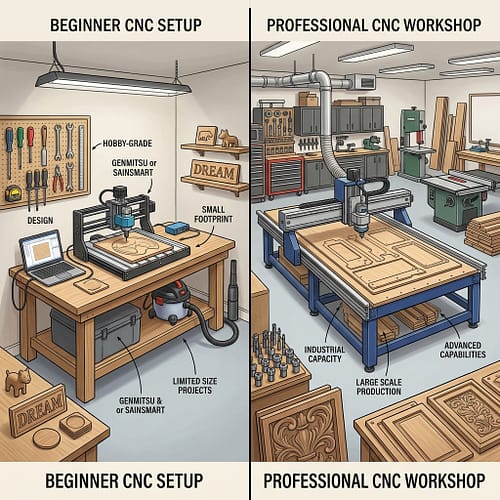
Not every shop needs a $40,000 monster, and not every pro can get by on a $400 hobby router. Here’s how to match the machine to the mission.
Budget-friendly options for hobbyists and startups. If you’re learning or making the occasional project, start with the Genmitsu 3018-PROVer or PROVerXL 4030. Choose these if keeping your investment low matters more than cutting large sheets. You’ll learn the ropes without betting the house.
Mid-range machines for growing businesses. When woodworking starts paying the bills, step up to the Shapeoko 4, Onefinity Woodworker, or X-Carve Pro. Pick these if reliability and larger work areas matter more than staying dirt cheap. They handle real production without industrial overhead.
Enterprise-level solutions for professional workshops. Running full sheets all day? The ShopSabre PRO, Laguna Swift, or Biesse Rover earn their keep. Choose these if throughput and durability matter more than upfront cost. These machines are investments that pay back through sheer output.
What Are the Most Common Mistakes to Avoid When Buying a CNC Machine?

Plenty of folks learn these lessons the hard way. You don’t have to.
- Underestimating maintenance. Rails need cleaning, bits need replacing, and spindles need care. A neglected machine turns into an expensive paperweight. Budget time and money for upkeep from day one.
- Choosing on price alone. The cheapest machine is rarely the cheapest to own. Flex, breakdowns, and poor cuts cost more than you saved. Weigh quality against price, not price by itself.
- Ignoring software compatibility. If a machine won’t play nice with your existing design tools, you’ll waste hours on workarounds. Confirm compatibility before you buy.
- Neglecting training and support. A great machine with no support leaves you stranded. Favor brands with strong documentation, active communities, and responsive help. That safety net is worth real money.
The Bottom Line on Choosing Your Machine

Choosing from the 10 best CNC machines for woodworking comes down to honest self-assessment: what you make, how much of it, and what you can spend. Beginners should start smart with the Genmitsu 3018-PROVer or PROVerXL 4030. Growing shops thrive on the Shapeoko 4, Onefinity, or X-Carve Pro. Full-scale operations belong on a ShopSabre PRO, Laguna Swift, or Biesse Rover.
No machine does the work for you—it just makes your work go further. So measure your space, set a real budget, and pick the one that fits the job in front of you. Then plug it in, load a file, and make some sawdust. The best CNC machine is the one that’s already earning its place in your shop.
Frequently Asked Questions
How much does a good woodworking CNC machine cost in 2026?
Entry-level hobby CNC machines start around $300–$900. Mid-range prosumer and small-business machines run $1,500–$6,500. Professional and industrial models range from $12,000 to over $50,000, depending on size, spindle power, and automation.
What is the best CNC machine for woodworking beginners?
The Genmitsu 3018-PROVer is a strong starting point for beginners thanks to its low price and large support community. Hobbyists ready for bigger projects often step up to the SainSmart PROVerXL 4030 or Shapeoko 4.
How long does it take to learn to use a CNC machine?
Most beginners produce simple projects within a few days of setup. Reaching real fluency with design software like Fusion 360 or VCarve typically takes a few weeks to a few months of regular practice.
What software do CNC woodworking machines use?
Common options include Fusion 360, VCarve, Aspire, Easel, and Carbide Create. Always confirm your chosen machine supports the software you plan to use before buying, since compatibility affects your entire workflow.
Are expensive CNC machines worth it for hobbyists?
For most hobbyists, no. A machine in the $700–$3,000 range delivers excellent results without industrial overhead. Enterprise machines only pay off when you’re running high volumes that justify the higher cost and larger footprint.